Cons of WooCommerce:
Responsive Web Design in Johannesburg: Why Your Business Needs Mobile-First Development in 2025
Looking for responsive web design in Johannesburg? Discover why mobile-first development is crucial for your business and how to choose the right web design agency in 2025.
Walk into any coffee shop in Sandton, restaurant in Rosebank, or shopping center in Fourways, and you’ll notice something interesting: almost everyone is staring at their phone. They’re not just scrolling social media—they’re researching products, comparing services, reading reviews, and making purchasing decisions right from their smartphones.
If your business website doesn’t work flawlessly on mobile devices, you’re losing customers every single day. It’s that simple. In South Africa, mobile internet usage has overtaken desktop browsing, with over 60% of web traffic now coming from smartphones and tablets. Yet surprisingly, many Johannesburg businesses still operate websites designed primarily for desktop computers, forcing mobile users to pinch, zoom, and struggle through terrible experiences.
This isn’t just about user frustration—it directly impacts your bottom line. Google now uses mobile-first indexing, meaning they primarily evaluate your site’s mobile version when determining search rankings. Poor mobile experience equals poor visibility, which equals lost revenue. Let’s explore why responsive web design has become absolutely essential for Johannesburg businesses and what you need to know before investing in a mobile-optimized website.
This isn’t just a technical decision. Your e-commerce platform affects everything from how quickly you can launch, to how much control you have over design and functionality, to your monthly costs, to how easily you can scale as sales grow. Choose the wrong platform, and you might find yourself rebuilding your entire store in two years. Choose wisely, and you’ll have a foundation that grows with your business for many years to come.
Both Shopify and WooCommerce power successful online stores across South Africa—from small boutiques selling handmade jewelry to major retailers processing thousands of orders monthly. Neither is universally “better.” The right choice depends entirely on your specific situation: technical comfort level, budget, product type, customization needs, and long-term goals.
Let’s break down exactly what each platform offers, what they actually cost (including the expenses most people forget), and which businesses should choose which option. By the end, you’ll know with confidence which platform fits your needs.
Think of Shopify as renting a fully furnished shop in a managed mall. The mall (Shopify) handles security, maintenance, infrastructure, and provides all the fixtures. You bring your products, arrange them how you like within the space, and start selling. You don’t own the building, but you don’t have to worry about plumbing, electricity, or structural issues either.
What Exactly is Responsive Web Design?
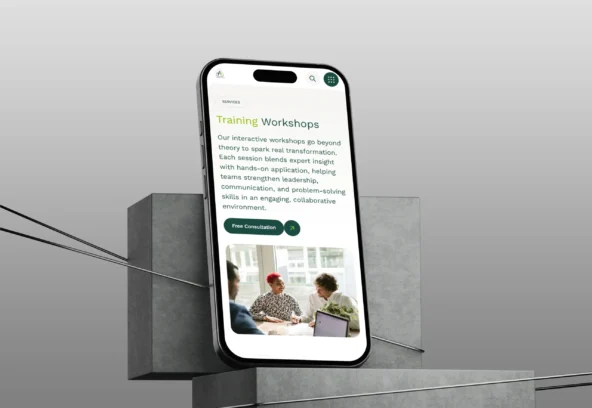
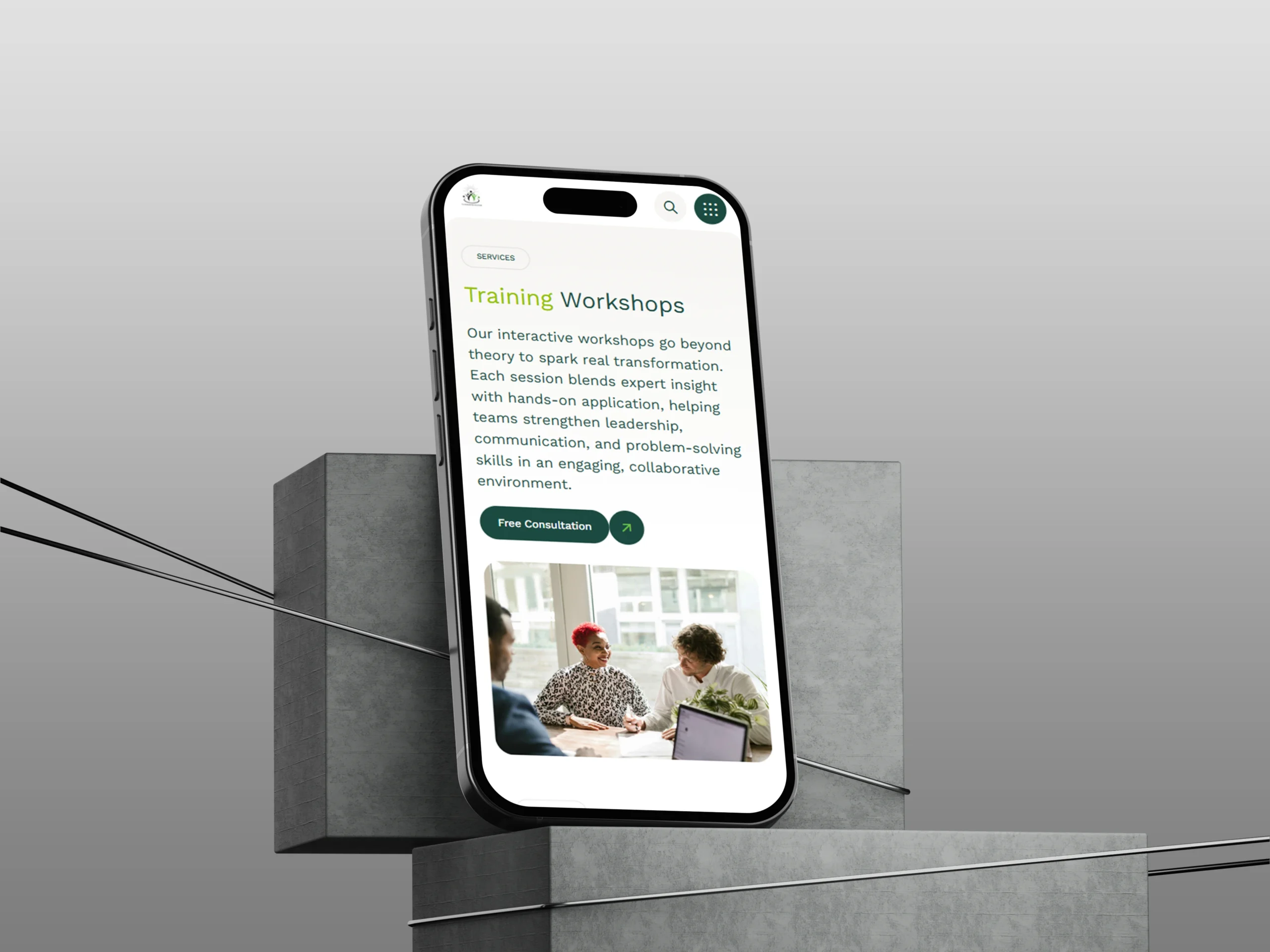
Responsive web design means your website automatically adapts to whatever screen size someone is using—smartphone, tablet, laptop, or desktop monitor. The layout shifts, images resize, navigation menus transform, and text remains readable without zooming or horizontal scrolling. It’s one website that works beautifully everywhere, not separate mobile and desktop versions requiring double the maintenance.
Think of it like water taking the shape of whatever container you pour it into. Your website content flows and reshapes itself based on the device, ensuring optimal viewing and interaction regardless of screen dimensions. A navigation menu with six links might display horizontally across the top on desktop but collapse into a hamburger menu icon on mobile. A three-column layout on large screens becomes a single scrolling column on phones. Images that sit beside text on desktop move above or below that text on smaller screens.
Mobile-first design takes this concept further by starting the design process with mobile devices, then scaling up to larger screens. This approach ensures the most constrained experience—the smartphone—works perfectly, with additional features and layout options added for progressively larger screens. It’s the opposite of how websites were traditionally built (desktop first, mobile afterthought) and produces far better results.
Why does mobile-first matter specifically? Because it forces designers to prioritize what’s truly important. When you have limited screen real estate, every element must justify its existence. This clarity of purpose creates better websites even on desktop—focused, efficient, and user-centered rather than cluttered with unnecessary elements that made sense on big screens but serve no real purpose.
Why Johannesburg Businesses Can’t Ignore Mobile Optimization
The statistics paint a clear picture. South Africans spend an average of 8-9 hours daily on their mobile devices. When someone searches for “plumber near me,” “best restaurant Sandton,” or “emergency electrician Johannesburg,” they’re almost certainly doing it from their phone—and they need immediate, usable information.
Let’s get specific about what poor mobile experience costs you. Research consistently shows that 57% of users won’t recommend a business with a poorly designed mobile site. Think about that: more than half your potential word-of-mouth marketing disappears because your website is frustrating on phones. Worse, 40% of visitors will immediately go to a competitor’s site if yours doesn’t load or function properly on mobile.
Google’s mobile-first indexing fundamentally changed the game in 2019 and continues to dominate in 2025. Google predominantly uses your mobile site’s content for indexing and ranking. If your mobile experience is terrible, your search rankings suffer—even for people searching from desktop computers. Your website could be beautiful on desktop, but if the mobile version is broken, slow, or unusable, Google assumes it’s a poor-quality site overall.
Local search makes this even more critical for Johannesburg businesses. When someone searches “web design agency Johannesburg” or “restaurants near Rosebank,” Google heavily favors mobile-friendly sites in results. These local searches often have immediate commercial intent—someone needs a service right now and will contact the first business that makes it easy. If your competitor’s site works perfectly on mobile while yours requires zooming and sideways scrolling, guess who gets the call?
The competitive landscape in Johannesburg has intensified. Customers have options—lots of them. Your potential client researching accounting services, legal advice, or home renovation doesn’t just visit your site. They’re comparing you against five competitors simultaneously, all tabbed open on their phone. The business with the smoothest mobile experience wins, even if their service isn’t necessarily superior. First impressions matter, and on mobile, your website IS that first impression.
Signs Your Johannesburg Website Isn’t Mobile-Friendly
Not sure if your site has a mobile problem? Here are the telltale signs that scream “we haven’t updated since 2015.”
Horizontal scrolling required is the most obvious red flag. If visitors must swipe left and right to read content or see your entire layout, you have a serious problem. Desktop-width content crammed onto a phone screen creates immediate frustration. Users shouldn’t need to hunt for information that’s hidden off-screen.
Tiny, unreadable text forces visitors to pinch and zoom constantly. If someone needs to zoom in to read your carefully crafted copy, they probably won’t bother. Mobile text should be readable at default zoom levels—typically 16px font size minimum for body text. Anything smaller strains eyes and creates friction.
Buttons and links too small to tap accurately drive people crazy. Ever tried tapping a tiny “Contact Us” link on your phone and accidentally hit the wrong thing three times? That’s a mobile usability failure. Touch targets should be at least 48×48 pixels—roughly the size of a fingertip. Navigation menus with tightly packed links don’t work on touch screens.
Slow loading times on mobile networks kill conversions. If your site takes 5-10 seconds to load on 4G or 5G, visitors leave before seeing anything. Mobile users are especially impatient—every additional second of load time increases bounce rate significantly. Large unoptimized images, bloated code, and excessive scripts cause these delays.
Navigation that doesn’t work properly on touch screens creates confusion. Drop-down menus designed for mouse hover don’t translate well to tap interfaces. Hidden navigation that’s hard to find or activate frustrates users trying to explore your site. Your menu structure should be finger-friendly and immediately obvious.
Forms that are impossible to fill out on mobile destroy lead generation. Long forms with tiny input fields, no autofill support, and poor validation messages create terrible experiences. Mobile users won’t fight with complicated forms—they’ll abandon them and try a competitor who makes it easy.
Pop-ups that cover entire screens with no clear way to close them are the ultimate mobile sin. Google actually penalizes sites that use intrusive interstitials on mobile. That newsletter signup pop-up that seems reasonable on desktop becomes a full-screen roadblock on phones, often with the close button cut off or impossibly small.
Want to test your site right now? Pull out your phone and honestly evaluate your own website. Can you easily read everything? Do buttons respond correctly to taps? Can you find key information—phone number, services, contact form—within seconds? If you’re struggling, your customers definitely are.
The Business Benefits of Mobile-Responsive Design
Investing in proper responsive design delivers measurable returns across multiple dimensions of your business.
Improved search engine rankings come naturally from mobile optimization. Google rewards sites that provide excellent mobile experiences with higher positions in search results. Since local searches often have strong commercial intent, ranking higher means more qualified leads finding your business. Better visibility directly translates to more traffic, more inquiries, and more sales.
Dramatically better user experience keeps visitors engaged longer. When your site works smoothly on any device, people actually explore your content instead of immediately bouncing. They read about your services, view your portfolio, check testimonials, and ultimately contact you because the experience was pleasant rather than frustrating. Happy visitors become customers; frustrated visitors become someone else’s customers.
Higher conversion rates result from removing friction. Whether your conversion goal is form submissions, phone calls, purchases, or downloads, mobile optimization increases completion rates. When people can easily accomplish what they came to do, more of them follow through. Even a modest improvement in conversion rate—say from 2% to 3%—means 50% more leads from the same traffic.
Lower bounce rates signal quality to both search engines and analytics. When fewer people immediately leave your site, Google interprets this as a sign of relevant, useful content and may boost your rankings further. High engagement metrics create a positive feedback loop: better rankings bring more traffic, which provides more data showing Google that people find value, leading to even better rankings.
Competitive advantage matters in crowded markets. If you’re a law firm, accounting practice, digital agency, or restaurant in Johannesburg competing against dozens of similar businesses, mobile experience can be your differentiator. When a potential client is comparing options, the business with the website that “just works” has an edge—even if all else is equal.
Single website maintenance saves time and money compared to managing separate mobile and desktop sites. Responsive design means you update content once, and it automatically works everywhere. No need to remember to update two different versions or worry about consistency between them. This efficiency extends to hosting costs, domain management, and SEO efforts—everything focuses on one property.
Future-proofing for new devices happens automatically. Responsive sites work on devices that didn’t exist when you built the site. Foldable phones, new tablet sizes, giant 4K monitors—your site adapts to whatever screen people are using. You don’t need to rebuild every time Apple releases a new iPhone or Samsung launches a different tablet size.
What to Look for in a Johannesburg Web Design Agency
Choosing the right partner for your responsive design project requires evaluating several key factors.
Portfolio demonstrating mobile expertise should be your first checkpoint. Don’t just look at how their example sites appear on desktop—pull them up on your phone. Do they load quickly? Does navigation work smoothly? Are images crisp and properly sized? Does content remain readable without zooming? Ask potential agencies specifically about their mobile-first design process.
Technical capabilities beyond just design separate great agencies from mediocre ones. Responsive design requires technical skill in CSS, JavaScript, and performance optimization—not just aesthetic sense. Ask about their approach to performance optimization, image compression, lazy loading, and mobile speed. A beautiful design that loads slowly defeats the purpose.
Understanding of local market context helps agencies serve Johannesburg businesses better. Do they understand South African mobile network realities and design for users who might be on slower 3G connections occasionally? Do they know local payment gateways, shipping providers, and business practices? An agency that primarily serves international clients might not grasp local considerations.
Testing process across real devices ensures quality control. Some agencies only test on desktop browser simulators, which don’t catch all mobile issues. Quality agencies test on actual iPhones, Android devices, and tablets at various screen sizes. Ask what devices they test on and whether they do user testing with real people.
Ongoing support and maintenance matters because responsive sites need updating as devices evolve and mobile operating systems change. Understand what happens after launch—do they monitor mobile performance, provide updates when iOS or Android releases major versions, and help if mobile-specific issues arise?
Clear communication about mobile strategy from the start indicates a professional approach. They should ask about your mobile users specifically: What percentage of your traffic is mobile? What are users trying to accomplish on phones versus desktops? Are there tasks better suited for mobile or desktop? Good agencies tailor the mobile experience based on actual user needs, not just shrink the desktop version.
Results-focused mindset looks beyond aesthetics to business outcomes. Ask about conversion rate optimization for mobile users, mobile SEO strategy, and how they’ll measure success. An agency focused on driving results thinks about mobile as a business opportunity, not just a technical requirement.
The Investment in Responsive Design
Responsive web design in Johannesburg typically costs anywhere from R15,000 for basic business sites to R50,000+ for complex e-commerce or custom applications. The investment varies based on design complexity, number of pages, custom functionality, content creation needs, and integration requirements.
Here’s the value proposition: proper mobile optimization increases your effective reach by 60%+ immediately (the percentage of traffic now on mobile). It improves conversion rates by removing friction. It enhances SEO, bringing more organic traffic. And it future-proofs your site for emerging devices. When you calculate ROI, responsive design pays for itself many times over through increased leads and sales.
Many Johannesburg businesses have discovered that poor mobile experience was costing them thousands in lost revenue monthly—money that evaporated because frustrated mobile visitors went to competitors. Fixing the problem recaptured that revenue while requiring a one-time investment equivalent to just a few lost sales.
Taking Action on Mobile Optimization
If your Johannesburg business doesn’t have a properly responsive website in 2025, you’re bleeding potential customers daily. The good news? This problem is solvable. Whether you need a complete redesign or responsive optimization of your existing site, the right development partner can transform your mobile presence relatively quickly—typically 6-10 weeks depending on scope.
Start by honestly assessing your current mobile experience. Use Google’s Mobile-Friendly Test tool to get an objective evaluation. Ask friends or employees to attempt specific tasks on your site using their phones—can they find your services, contact information, and key details easily? Check your Google Analytics to see what percentage of traffic comes from mobile and what those users’ bounce rate and conversion rate look like compared to desktop visitors.
Once you understand the problem’s scope, reach out to experienced responsive design agencies in Johannesburg. Explain your business goals, target audience, and the specific issues you’ve identified. A quality agency will conduct their own mobile audit, explain the necessary improvements, and provide a clear plan with timeline and investment required.
Ready to stop losing mobile customers? Sehoole Creative Studio specializes in mobile-first responsive design for Johannesburg businesses across all industries. We build websites that work beautifully on every device—desktop, tablet, and smartphone—ensuring you never lose another customer to poor mobile experience. Contact us at info@sehoole.design or call +27 067 293 4209 for a free mobile website audit and consultation. We’ll evaluate your current mobile performance and show you exactly how responsive design can drive more leads and sales for your business.